

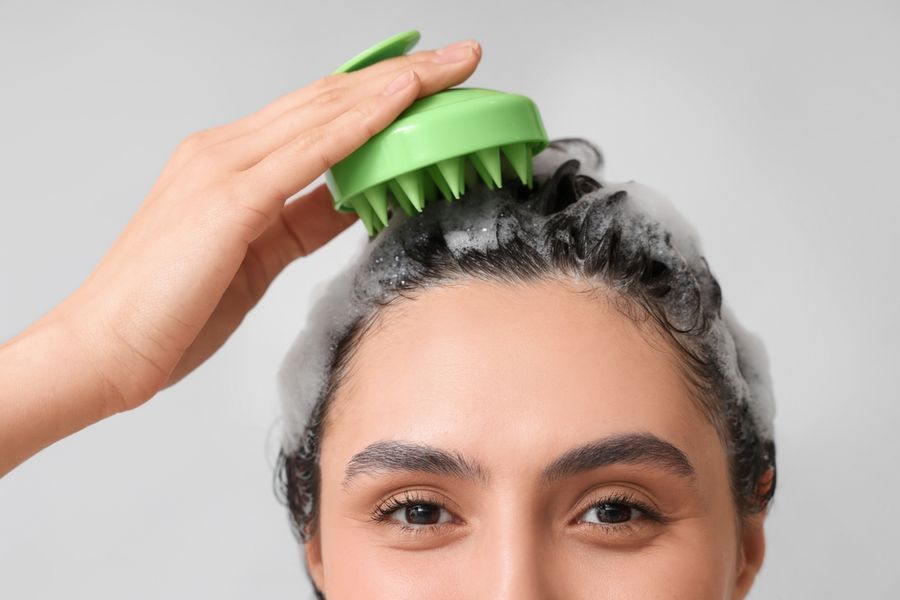
Home scalp care tools often look nearly identical on a product page, but small design differences can change how useful they feel in the shower. Bristles that are too stiff may feel harsh, while a slippery handle or slow-drying body can make the tool inconvenient. It's helpful to understand that daily fit depends less on attachment count and more on flexibility, control, wet-use design, and cleanup.
What Home Scalp Care Tools Actually Do
Home scalp care tools are handheld brushes or massagers used to spread shampoo, loosen styling-product residue, and work through sections of the scalp during washing. Some are solid silicone pieces, while others combine a handle with flexible teeth or bristles. They can support a cleansing routine, but they do not replace shampoo or treat an underlying scalp condition.
A practical comparison should focus on four points. Bristle flexibility determines how much pressure reaches the scalp. Grip affects control when hands are wet. Wet-use design covers drainage, seams, and whether water becomes trapped inside. Drying time determines how easily the tool can be rinsed, stored, and reused without remaining damp.
These criteria predict routine fit better than attachment count because every extra part adds another surface to rinse, dry, store, or lose. A simple tool that feels comfortable and dries cleanly may be more useful than a larger kit with several heads that perform similar jobs.
Popular Scalp Care Tools
Popular handheld options differ mainly in bristle shape and grip. The Tangle Teezer Scalp Exfoliator & Massager uses two types of teeth and a winged body designed to stay secure in wet hands. The Briogeo Scalp Revival Stimulating Therapy Massager uses rubber tips and can be paired with shampoo, oil, or another treatment on wet or dry hair.
Other choices emphasize storage and simple shower use. The Sephora Collection Silicone Scalp Massager has a palm-sized silicone design and hanging cord, while the Ceremonia Scalp Masajeador combines flexible bristles with a wrist strap for added control. These differences reinforce the need to compare flexibility, wet-hand grip, drainage, and drying convenience rather than choosing solely by brand or appearance.
How a Scalp Tool Fits Into a Shower Routine
The tool should enter the routine after hair is fully wet and shampoo has reached the scalp. The user can hold it flat, apply light pressure, and move it across small sections rather than dragging it through the length of the hair. The American Academy of Dermatology advises applying shampoo to the scalp so built-up products, dead skin, and excess oil can be washed away without unnecessarily drying the rest of the hair.
Short, controlled movements are easier to manage than wide circles, especially with long, curly, or easily tangled hair. A comfortable grip matters because the tool should not require a tight squeeze or repeated repositioning once it becomes coated with water and shampoo.
After use, rinse away visible residue from the base and between the bristles. Then shake off excess water and place the tool where air can reach all sides. A design that looks convenient during use can become less practical if water collects inside a hollow handle or the bristles remain pressed against a wet shower shelf.
Who Benefits Most From a Scalp Care Tool
A scalp brush or massager is most useful when it solves a specific routine problem rather than adding another optional shower step.
- A person who uses styling creams, gels, or dry shampoo: Flexible bristles can help move shampoo across the scalp, although regular washing still does the actual cleansing.
- Someone with limited hand strength or slippery shower products: A broad, textured grip can provide better control, but a bulky handle may be harder to maneuver through thick hair.
- A person with dense hair that is difficult to section by hand: Longer flexible teeth may reach the scalp more easily, although stiff or widely spaced teeth can feel uncomfortable.
- Someone who wants a tool for both wet and dry use: A washable one-piece design can move between routines, provided it is rinsed and fully dried after product use.
The Drawbacks That Appear After a Few Uses
A firm tool can feel effective during the first use because it creates stronger pressure, but that does not make it the best choice for repeated contact. Stiff bristles, sharp tips, or forceful scrubbing may feel uncomfortable on a sensitive scalp. Long teeth can also catch strands if the tool is rotated through the hair instead of moved in small sections.
Wet-use design can create its own problems. Hollow handles, removable inserts, and deep seams may trap shampoo or water. Tools with dense bristle clusters can take longer to dry, while smooth handles may become harder to control once covered with conditioner or oil.
A scalp tool is a weak choice for anyone expecting it to fix persistent flaking, pain, sores, or hair loss. It can assist with product distribution and routine washing, but it should not be treated as a replacement for appropriate care when scalp problems continue.
Cleanup and Ownership Commitments
Upkeep determines whether the tool remains pleasant to use. Remove caught hair, rinse away visible product, and let the tool air dry where water cannot pool around the bristles or handle.
Product instructions can show whether the design is realistic for daily use. Tangle Teezer describes its scalp exfoliator and massager as suitable for the shower, notes a winged shape intended to resist slipping in water, and advises rinsing away buildup before letting the tool air dry naturally. Those details are more useful than a long attachment list with no drying guidance.
Discard a tool if its bristles split, the surface cracks, or trapped residue cannot be cleaned out. A one-piece body may be easier to maintain, while a removable head can provide better access if the connection does not trap water.
How to Choose for Bristles, Grip, and Drying
For a sensitive scalp or fine hair, start with short, flexible bristles that bend under light finger pressure. The trade-off is a gentler feel with less force against stubborn buildup. For thick or dense hair, longer teeth may reach the scalp more easily, but they should still flex and move without pulling strands.
For shower-only use, prioritize a textured grip, simple drainage, and a body that can be rinsed from every angle. A palm-style tool can feel secure, while a narrow handled model may offer more reach. The better shape is the one that stays controlled without forcing the wrist into an awkward angle.
For frequent use, drying time should settle a close decision. Choose fewer seams, open spacing around the bristles, and a storage method that exposes the tool to air. A feature-rich tool offers little value if it remains wet, collects residue, or requires more cleanup than the scalp routine itself.
Frequently Asked Questions
Can a scalp care tool remove styling-product buildup?
It can help distribute shampoo and loosen residue during washing, but shampoo and thorough rinsing perform the cleansing. Avoid treating stronger pressure as a substitute for the right washing routine.
Should a scalp brush be used on wet or dry hair?
That depends on the product instructions and the intended routine. Wet use requires a water-safe, easy-to-rinse design, while dry use calls for gentle pressure and careful movement to avoid catching hair.
How should a scalp tool be dried after use?
Rinse away shampoo, hair, and visible residue, then place the tool in an open, ventilated area where water can drain away. Avoid sealing a damp tool in a drawer, bag, or closed shower container.
Choose the Tool That Fits the Routine
The most practical home scalp care tool should feel comfortable, stay secure in wet hands, rinse clean, and dry without extra effort. Compare bristle movement, grip shape, seams, and storage needs before counting attachments. The next step is to test how the tool flexes in hand and confirm that its care instructions match the way it will be used.