

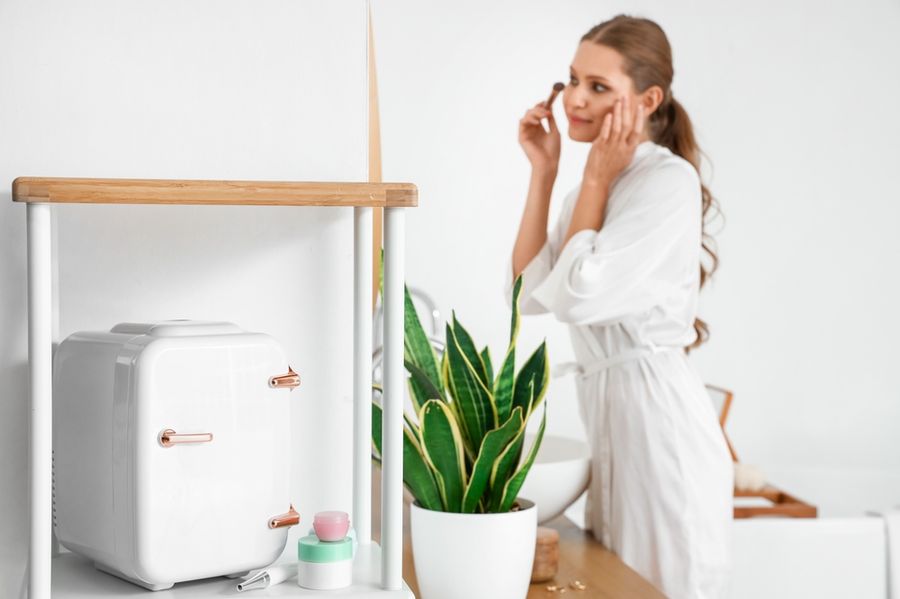
Warm bedrooms, crowded bathroom shelves, and leaking jars can make a premium skincare routine harder to manage. A beauty fridge creates a dedicated place for suitable products and tools, but cooling performance varies across compact models. Interior layout, room temperature, ventilation, and product storage directions determine whether the appliance improves the routine or simply occupies valuable vanity space.
What a Beauty Refrigerator Actually Is
A beauty refrigerator is a compact appliance marketed for cosmetics, skincare, masks, rollers, and similar items. It is usually smaller than a kitchen refrigerator and may include removable shelves, door bins, a mirrored front, or built-in lighting. Those styling features can improve convenience, but they do not describe how the unit cools.
Many compact models use thermoelectric cooling rather than a compressor. Some cool a set amount below the surrounding room temperature instead of maintaining one fixed interior temperature. For example, the Cooluli Glow model describes its cooling performance relative to ambient temperature and lists a maximum power draw in its specifications. A warm room can therefore affect how cool the interior becomes, even when the appliance is operating normally.
A beauty refrigerator is not a medical refrigerator, and refrigeration is not automatically better for every cosmetic. Product labels and manufacturer directions should decide what belongs inside. The appliance provides dedicated cool storage, not a universal way to extend shelf life.
How It Works in a Daily Skincare Routine
Start by separating products that may benefit from cool storage from products that should stay at ordinary room temperature. Eye masks, facial rollers, and some creams may feel more refreshing when chilled, but formulas with specific storage limits need closer attention. Sunscreens, acne treatments, prescription products, and anything with explicit temperature directions should be handled according to the label.
Next, measure the containers rather than relying on stated capacity. Tall pump bottles may not fit under fixed shelves, while wide jars can consume most of a small compartment. Removable shelving offers flexibility, but removing a shelf can reduce organization.
Placement changes performance and convenience. The unit needs a stable surface, an outlet, room for the door to open, and the ventilation clearance stated by the manufacturer. Packing the interior tightly or blocking vents can interfere with airflow.
Storage habits still matter after the appliance is plugged in. The U.S. Food and Drug Administration explains that temperature changes, sunlight, air, moisture, container cleanliness, and use patterns can affect cosmetic color, texture, odor, and shelf life. Keep lids closed, wipe spills promptly, and discard products that develop unusual changes instead of assuming that refrigeration protects them indefinitely.
Who Benefits Most From Dedicated Cool Storage
The appliance is most useful when it solves a repeated storage problem rather than adding a decorative feature.
- Someone whose bedroom or dressing area stays warm: A dedicated cooler can keep suitable products away from direct heat and sunlight, although an ambient-dependent model may perform differently during hotter weather.
- A premium-skincare user with cluttered shelves: Separate storage can make frequently used jars, masks, serums, and tools easier to find while keeping them away from crowded bathroom surfaces.
- A person who regularly uses chilled masks or facial tools: Keeping compatible items ready in one location removes the need to carry them between the vanity and kitchen refrigerator.
- A small-space buyer who measures carefully: A compact model can work on a narrow surface when the footprint, door swing, ventilation area, cord route, and interior fit have all been checked.
Someone with a cool, shaded cabinet and only a few room-temperature products may gain little. An organizer may solve the actual problem with less noise, power use, and surface loss.
The Real Downsides and Poor-Fit Situations
Small vanity compatibility involves more than fitting the base onto an empty patch of counter. The door may strike a mirror, wall, or organizer. Rear ventilation can push the unit farther forward than expected, while interior capacity may feel much smaller once shelves meet real jars and pump bottles.
Cooling consistency is another concern. A thermoelectric model that cools relative to the room may feel colder in winter than during a hot summer afternoon. A display or thermostat can make settings easier to understand, but a consumer mini fridge should not be treated as precision storage for medication or products requiring tightly controlled temperatures.
Noise, heat, and condensation may affect a bedroom setup. Fans can be noticeable at night, and the appliance releases heat into the room while cooling its interior. Moisture and product residue create another surface that needs cleaning.
A beauty refrigerator is a weak choice when the products do not call for cooling, the room has no safe ventilated location, or the user expects refrigeration to prevent contamination and expiration.
Purchase and Operating Commitments
The purchase price is only one part of ownership. Continuous operation uses electricity, and beauty fridge operating cost depends on power draw, local utility rates, room temperature, and door use. Compare the rated wattage and operating instructions instead of assuming that every small unit costs the same to run.
Maintenance is simple but ongoing. Shelves, door seals, and interior walls need regular wiping. Spills should be cleaned quickly, and ventilation openings must remain free of dust and clutter.
Return and warranty terms matter because sound level, interior fit, and cooling behavior are difficult to judge from photographs. Check whether the retailer accepts a return after operation, who pays return shipping, and which cooling components the warranty covers.
How to Decide Whether It Solves the Right Problem
Choose a compact beauty refrigerator when the room is regularly warm, compatible skincare products are spread across cluttered shelves, and chilled items are used often enough to justify a dedicated appliance. Give more weight to the cooling method, interior dimensions, shelf layout, ventilation needs, and rated power than to mirrors, lights, or exterior color.
For an adult investing in premium skincare while working with a small vanity and warm indoor conditions, the strongest fit is a narrow model with removable storage and clearly stated cooling performance. The accepted trade-off is permanent counter space, continuous electricity use, fan noise, and routine cleaning in exchange for a cleaner and more consistent storage routine.
Choose a closed organizer instead when clutter is the main issue and the room remains within the products’ recommended storage conditions. Use a household refrigerator only when the product manufacturer permits it and shared food storage will not create access problems.
Frequently Asked Questions
Do skincare products last longer in a beauty refrigerator?
Not automatically. Shelf life depends on the formula, packaging, use, cleanliness, storage conditions, and manufacturer guidance. Cooling should not be treated as a guarantee that a product will remain usable longer.
Can every serum and cream go inside?
No. Check the package or brand instructions before changing the storage environment. Some formulas may thicken, separate, become unpleasant to apply, or fall outside their recommended temperature range when kept too cold.
How much vanity space should be allowed?
Use the full exterior dimensions, then add the clearance required for ventilation, the open door, and the power cord. Compare the interior dimensions with the actual products intended for storage, since stated capacity does not show whether individual containers will fit.
Make the Cooling Method the First Check
A beauty fridge can bring order to a warm, crowded skincare area, but cooling design and physical fit matter more than decorative features. Check the storage directions on the intended products, measure the complete operating space, and confirm whether the model maintains a set temperature or cools relative to the room before buying.