

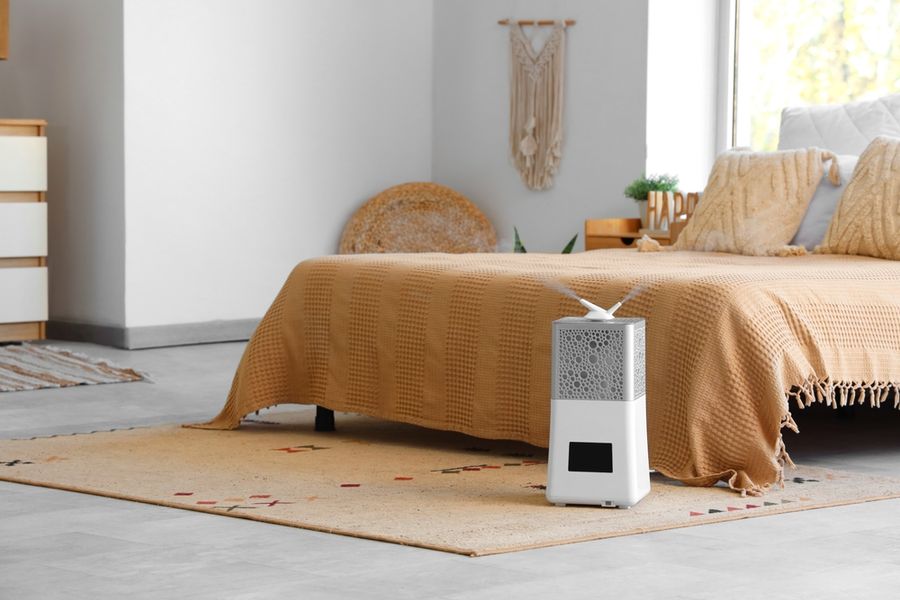
Choosing a compact bedroom humidifier can be more difficult than it first appears. A larger tank may reduce refills, but it can also take up too much nightstand space or include bright controls that interrupt sleep. A better choice balances overnight runtime, quiet operation, display brightness, and overall size. For light-sensitive sleepers, a smaller model with dimmable or fully dark controls may be more practical than one built mainly for maximum capacity.
Four Questions That Narrow the Choice
Start with four practical questions:
- Will the unit fit without crowding the bedside surface?
- Can every light be dimmed or switched off?
- Will the tank last through a normal night at the needed output?
- Is the operating sound acceptable in a quiet room?
These criteria work together because a machine that performs well in one area may still become inconvenient when it is difficult to place, refill, or darken.
Popular Compact Humidifiers
Dreo and Levoit offer several models that fit the needs of light-sensitive sleepers. The Dreo HM306 combines a compact three-liter tank with quiet operation and adjustable lighting, making it a strong fit for buyers who want visible controls during setup but less light overnight.
The Levoit Classic 160 takes a simpler approach with a smaller 2.5-liter tank, manual dial control, and no illuminated display. It also runs quietly and has a narrow footprint that works well on crowded nightstands. The Dreo suits sleepers who prefer more control features, while the Levoit may be the better match for anyone who wants a basic humidifier with no screen or glowing buttons.
The Four Criteria That Matter Most
1) Nightstand Fit and Refill Access
Product dimensions should be compared with the usable surface, not the total width of the nightstand. Allow space for a lamp, phone, water glass, charging cable, and any items normally kept beside the bed. The mist outlet should also have enough clearance from walls, curtains, books, and electronics.
A smaller tank can make the unit easier to lift, carry, and clean. A top-fill opening may reduce spills, but the lid still needs room to come off without hitting a shelf or headboard.
Quick test: Mark the humidifier’s footprint with paper or painter’s tape and confirm that the tank can be removed or filled without rearranging the entire nightstand.
2) Display Brightness and Light Controls
A glowing button that looks minor during the day can become distracting after the room goes dark. “Sleep mode” does not always mean the same thing across products. One unit may turn off every indicator, while another may only reduce brightness or leave a low-water light visible.
Check the manual or control instructions rather than relying on product photographs. Look for a dedicated display-off function, adjustable lighting, or controls that remain dark after a setting is selected. Avoid assuming that an app or timer automatically solves the light problem.
Quick test: Confirm which lights remain visible during normal operation, low water, sleep mode, and automatic shutoff.
3) Runtime at the Setting Actually Used
Maximum runtime is usually tied to the lowest output setting. A small tank may last overnight on low but empty sooner when room air is especially dry or a higher output is selected. Tank size should therefore be considered alongside mist level, room size, starting humidity, and the length of the sleep period.
The Dreo HM306 is a compact example, featuring a three-liter tank, up to 30 hours of operation in sleep mode, a 26-decibel noise rating, adjustable lighting, and a footprint of 7.6 by 10.2 inches. Those figures illustrate why a smaller model can still cover overnight runtime needs without occupying the space required by a large-capacity unit.
Quick test: Compare runtime at the expected mist setting, not only the longest figure printed on the box.
4) Quiet Operation Without Weak Output
Humidifiers can produce several kinds of sound, including a fan hum, water movement, occasional bubbling, button tones, or a low-water alert. A low published decibel figure is useful, but it may not capture every sound the sleeper notices in a very quiet room.
Placement also affects perceived noise. A hard or uneven surface may increase vibration, while positioning the unit close to the pillow can make a faint sound more noticeable. Quiet operation should not require a setting so low that it fails to address the room’s dryness.
Quick test: Check whether the product allows button sounds to be disabled and whether the return policy permits a practical bedroom trial.
What People Commonly Get Wrong
The first mistake is buying the largest tank that fits the budget. More capacity can reduce refill frequency, but it may also create a bulky appliance that is harder to place, carry, empty, and clean. A large unit positioned across the room may be less convenient than a smaller model that fits safely near the bed.
Another mistake is treating the longest runtime claim as a promise of identical results every night. Runtime changes with output level and room conditions. A unit advertised for extended operation may still need frequent refilling when it runs at a higher setting.
Maintenance is also easy to underweight. The U.S. Environmental Protection Agency advises emptying and refilling portable humidifiers daily, cleaning them every third day, using low-mineral water, and keeping indoor relative humidity at or below 50 percent. A tank that lasts several nights should not be treated as permission to leave the same water standing indefinitely.
Three Situations, Three Different Priorities
For a light-sensitive sleeper with a narrow nightstand:
Choose a compact model with a display-off function or lighting that can be fully disabled. A smaller tank is the better fit when it provides enough runtime for one night and leaves room for normal bedside items. The accepted trade-off is more frequent refilling in exchange for easier placement and less unwanted light.
For a sleeper who dislikes any appliance noise:
Give the most weight to operating sound, alert tones, and the retailer’s return policy. A quiet ultrasonic model may suit the room, but the user may need to accept manual humidity checks if a simpler unit lacks an automatic humidistat.
For someone who frequently forgets to refill appliances:
Overnight runtime and automatic shutoff deserve more weight than the smallest possible footprint. A somewhat larger tank may reduce morning interruptions, although the appliance will take up more space and may be heavier to carry for daily emptying and cleaning.
Cost, Maintenance, and Ownership Limits
Purchase price does not show the complete cost of ownership. Some units use replaceable filters, wicks, cartridges, or aroma pads, while filterless ultrasonic models may increase the need for low-mineral water and regular descaling. Review the manual for required supplies before assuming a low-cost unit will remain inexpensive to operate.
Cleaning design can matter more than decorative features. Wide tank openings and removable parts make routine care easier, while narrow corners can collect residue and be difficult to reach. A small tank may require more frequent filling, but its lighter weight can make daily emptying less awkward.
Return and warranty terms also affect the decision. Sound, button brightness, mist direction, and refill convenience are difficult to judge from a listing. Check whether the humidifier can be returned after use and whether the warranty covers the fan, controls, sensor, and misting system.
Prioritize Dark Controls and a Compact Footprint
For a light-sensitive sleeper with limited bedside space, the strongest choice is a compact model that can run through a normal night while keeping its controls fully dark.
Accepting a smaller tank can be worthwhile when it makes placement, lifting, and cleaning easier. Measure the nightstand and verify the exact sleep-mode light behavior before choosing a model.