

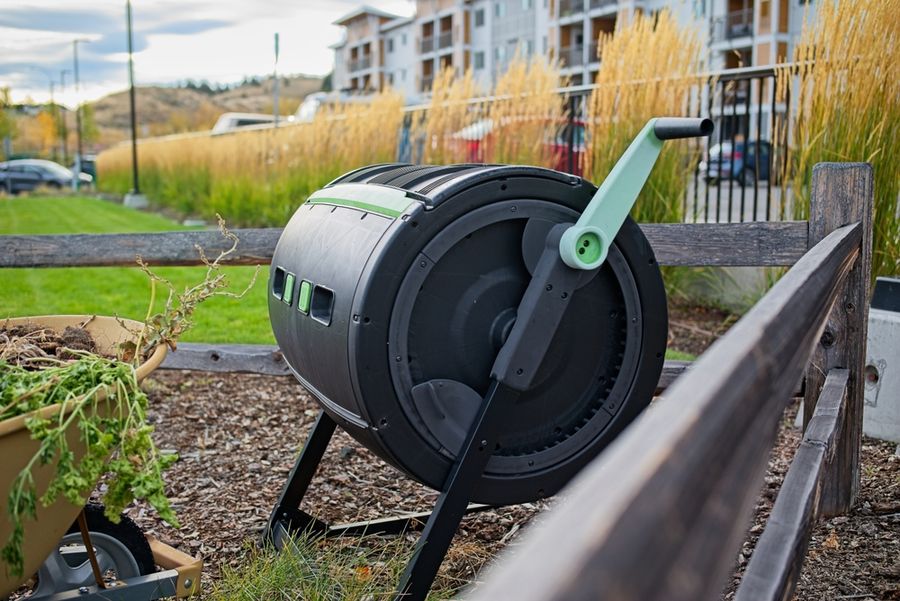
A hand-crank compost tumbler can take much of the strain out of one of composting’s most tiring jobs. Instead of wrestling with a heavy drum, gardeners can turn the contents with smaller, smoother movements that feel easier on the hands, wrists, and shoulders. With the right gear system, comfortable handle, stable frame, and manageable drum size, regular mixing becomes far more approachable and helps keep the composting routine active, steady, and rewarding.
What the Crank Changes in Everyday Use
A crank does not turn compost automatically. It changes how force reaches the drum. A basic tumbler often requires pushing molded grips or rolling the barrel with both hands. A crank lets the user make a smaller, repeated motion from one standing position.
That difference can reduce awkward reaching and sudden shifts in body weight. It may also help a user stop the drum at the door opening. However, a poorly placed handle can still strain the wrist or shoulder. Comfort depends on the complete motion, not the presence of a crank alone. A stable frame also matters because wobble can force the user to brace the unit with the other hand.
How Turning Supports the Composting Process
Composting is an aerobic process, which means the microbes need oxygen. They also need carbon-rich browns, nitrogen-rich greens, and suitable moisture. Turning helps mix those materials and bring air into the batch. The U.S. Environmental Protection Agency advises occasional turning and describes properly damp compost as feeling like a wrung-out sponge.
In normal use, scraps and browns enter through the hatch. The door closes, and the crank rotates the drum through several turns. Internal fins or baffles lift the contents before gravity drops them. Turning should redistribute material rather than compress it against one side.
Short, controlled turns are usually enough to mix the batch. For example, a wet pocket of food scraps may move away from the wall and mix with dry leaves. The crank makes that step easier, but the ingredients still determine whether decomposition stays active.
Four Details That Determine Turning Comfort
Four details decide whether a crank improves daily use. They are the gear system, loaded drum, working height, and condition of the compost. Each one changes the force needed to start, control, and stop the barrel. Checking them separately gives a clearer answer than relying on an “easy-turn” label.
Check the Gear System, Not Just the Handle
Some handles connect directly to the drum, while others use gears to increase mechanical advantage. A geared system can trade speed for easier rotation, so the user may make more handle turns with less force. Many current examples also pair the gears with a ratchet that locks the barrel in position.
Grip shape still matters. A narrow or slippery handle may be uncomfortable even when the gears work well. Check whether the crank turns in both directions, locks securely, and offers a free-turn setting. Also ask whether replacement gears and handles are available.
Match Drum Capacity to a Comfortable Load
A large barrel holds more material, but the full load creates more resistance. Dense grass, wet scraps, and compacted leaves can make the drum harder to start. A bigger capacity may therefore work against the comfort benefit that attracted the buyer.
A dual-chamber design can keep each active batch smaller, although the divider reduces open space inside. Before choosing, check the recommended working load rather than the total shell capacity. Look for a manual or demonstration that shows the tumbler operating with material inside. The key question is whether the drum remains controllable at the load normally produced by the household.
Measure the Loading and Emptying Height
Turning is only one part of the task. The user must also lift scraps to the opening, close the door, and empty finished compost. A high hatch may place more work on the shoulder. A low hatch may require repeated bending.
Measure the handle and door heights against the person who will use the tumbler most often. Check whether a bucket, garden cart, or shallow tray fits under the opening. A barrel that locks with the door facing down can simplify unloading. The best height allows loading, cranking, and emptying without changing to an uncomfortable posture.
Manage Moisture Before Blaming the Crank
The contents can change turning effort as much as the hardware. An overly wet batch may form heavy clumps that slide and make the drum lurch. A very dry batch may tumble easily but break down slowly. Regular moisture checks help protect both comfort and compost quality.
If the mix feels soggy or smells stale, add dry browns before forcing the crank. If it is dry and inactive, add a small amount of water and mix again. Interior baffles should lift material rather than let it slide around the wall. Check the vent openings and baffle layout, since both affect mixing and airflow.
Hand-Crank Models Worth Considering
Fortunately, there are several models that strike the right balance:
Maze Easy-Turn 65-Gallon Compost Tumbler
This model pairs a three-gear handle with a ratchet that locks the drum in position. The dual chambers allow one batch to mature while the other receives fresh scraps. Its large capacity may appeal to active gardeners, although buyers should confirm that the handle height and loaded drum remain comfortable.
Maze 48-Gallon Geared Compost Tumbler
The smaller Maze model also uses a geared handle and locking ratchet, but its more moderate drum size may suit households that produce less compostable waste. Its open frame leaves room beneath the drum for a bucket or cart, which can reduce awkward lifting when emptying finished compost.
VEVOR 53-Gallon Dual-Chamber Compost Tumbler
VEVOR’s model uses a hand-crank shaft, internal fins, and a lockable ratchet to help mix and position the drum. Adjustable vents support airflow, while separate chambers allow filling and curing to happen at the same time. The crank-assisted design fits this article’s focus, but shoppers should still compare the handle’s reach and resistance with their own comfort needs.
Choose the Design Around the Motion That Hurts
For reduced grip strength, favor a broad handle, low starting resistance, and a ratchet that holds the door in place. The trade-off may be slower rotation because the gears require more crank turns.
For shoulder discomfort, focus on handle height, reach, and drum size before capacity. A smaller unit may require more batches, but it can reduce the force and range of motion needed each time. Households with many wet kitchen scraps should also keep a steady supply of dry browns. Better mixing starts with a manageable load.
Make the Crank Solve the Right Problem
A hand-crank tumbler can remove much of the awkward pushing, lifting, and reaching that makes regular compost turning feel like a chore. The most useful design is one that matches the movement causing the most discomfort. A geared crank and broad handle may help with limited grip strength, while a lower working height and smaller drum can reduce shoulder strain and heavy resistance.
Before choosing a model, check the handle position, locking system, loaded turning action, and space beneath the drum for unloading. A well-matched tumbler makes it easier to mix compost often, manage each batch, and stay consistent through the seasons. That steady routine is where the crank delivers its greatest benefit.