

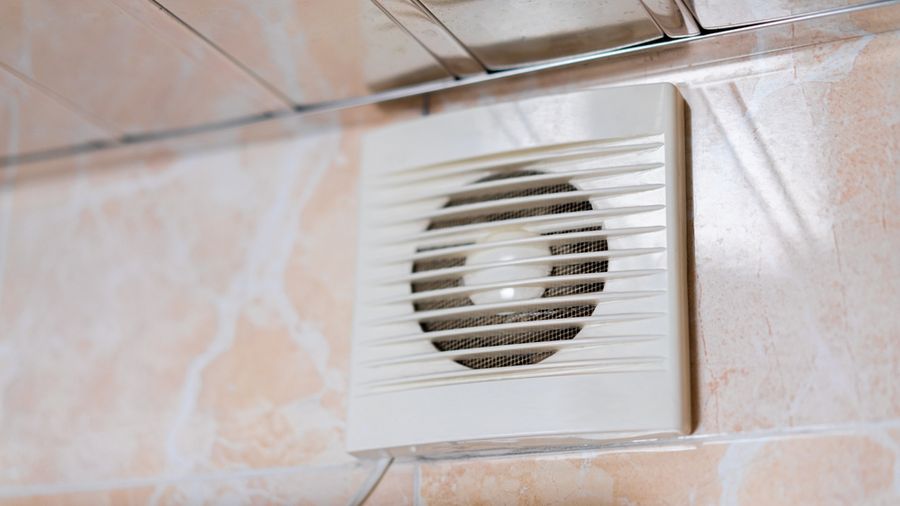
Persistent bathroom moisture can make a stronger exhaust fan seem like the easiest fix, especially in an older home. Yet airflow depends on the entire ventilation path, not just the fan motor. A narrow, crushed, disconnected, or poorly routed duct can keep humid air from reaching the outdoors. The result may be wet mirrors, damp surfaces, and lingering moisture even after a louder or more powerful fan has been installed.
What a Bathroom Ventilation Upgrade Actually Includes
A bathroom ventilation system combines an exhaust fan, ductwork, an exterior termination, electrical controls, and a path for replacement air to enter the room. The fan pulls humid air from the bathroom, while the duct carries it outside through a roof or exterior wall vent.
Replacing only the visible ceiling unit may not correct the underlying problem. An older duct might end in an attic, narrow sharply at a bend, separate at a joint, or connect to an exterior cap that no longer opens freely. A high-capacity fan attached to a restrictive route may deliver much less airflow than its product rating suggests.
Fan speed is also different from installed airflow. Multiple speed settings can help match daily use, but they do not repair a blocked outlet or overcome every poor duct arrangement. A complete upgrade begins with the existing exhaust path rather than the control panel.
How Ventilation Works in an Older Bathroom
The first step is to locate the current fan and determine where its duct ends. A contractor may inspect the attic, ceiling cavity, roof, or exterior wall to confirm that humid air leaves the building. The exterior cap should open when the fan runs and close afterward without being blocked by debris, paint, nesting material, or a damaged damper.
The Building America Solution Center advises routing bathroom exhaust directly outdoors rather than into an attic, crawlspace, wall cavity, or space between floors. Its installation guidance also favors the most direct duct route possible, the manufacturer-specified duct diameter, few bends, sealed joints, and protection against crushed or kinked ductwork.
Once the route is verified, the homeowner can compare airflow capacity needs with the size and layout of the bathroom. The fan housing must fit the ceiling or wall opening, while the exhaust port should face the intended termination to avoid an immediate sharp turn. Electrical controls may also be updated with a timer, humidity control, or separate light and fan switches.
Who Benefits Most From a System Upgrade
A full ventilation review is especially useful when the symptoms suggest more than a worn fan motor.
- A homeowner with a fan that runs but leaves mirrors and walls wet: The system may have weak installed airflow, a blocked exterior cap, or a restrictive duct rather than simply an underpowered motor.
- Someone renovating a bathroom beneath an accessible attic: Open access can make it easier to inspect the complete duct route, replace damaged sections, seal joints, and create a proper exterior termination.
- An owner of a home where the fan exhausts into an attic or wall cavity: Rerouting the duct outdoors addresses a basic system flaw that a faster replacement fan would leave unchanged.
- A household that forgets to run the fan long enough: A timer or humidity-based control can reduce dependence on someone remembering to return and switch the unit off.
The value of the upgrade depends on correcting the condition that limits moisture removal. A working exterior route may justify a straightforward fan replacement, while a missing route can turn the project into a larger retrofit.
Matching Airflow Capacity to the Bathroom
Airflow is measured in cubic feet per minute, commonly shown as CFM. A larger number is not automatically better because the required capacity depends on bathroom size, ceiling height, enclosed areas, fixtures, duct resistance, and whether the fan operates continuously or only when needed.
For bathrooms up to 100 square feet, the Home Ventilating Institute recommends approximately one CFM per square foot. Its guidance uses a fixture-based calculation for larger bathrooms and notes that enclosed toilet rooms may need separate ventilation. High ceilings and divided layouts may also require closer planning than a simple floor-area calculation provides.
The manufacturer’s stated CFM rating should be treated as a starting point rather than proof of how much air the installed fan will actually move. Long ducts, tight bends, narrow connections, and blocked exterior vents can reduce real-world airflow. A contractor can measure installed airflow when moisture continues after the equipment has been replaced.
The Real Downsides and Retrofit Limits
Older home compatibility may not be clear until the fan housing and accessible ductwork are inspected. Ceiling cavities can contain joists, wiring, insulation, pipes, or framing that limit housing placement and duct direction. The new fan may also require a different opening or mounting arrangement than the existing unit.
Duct route options depend heavily on bathroom location. A top-floor bathroom below an accessible attic may offer a more manageable route to an exterior wall or roof. Installing a new duct from a lower floor can be more difficult because the route may pass through concealed framing and finished areas. A bathroom located on an exterior wall may allow a direct wall exhaust where the layout and local requirements permit it.
Both wall and roof terminations require proper sealing and exterior weather protection. Roof work introduces a penetration that must be flashed correctly, while a wall outlet must be integrated with the exterior finish and fitted with a working damper. Those tasks add scope beyond changing the fan housing.
Noise can also remain after a fan upgrade. Tight bends and restrictive ducts can reduce airflow while increasing air noise and power use. A quiet fan connected to a poor route may therefore sound different after installation than its published sound rating suggests.
Installation Cost and Ongoing Commitments
The installation cost range can be wide because the visible fan may represent only a small part of the project. Replacing a unit in an existing opening with usable wiring and a sound exterior duct is generally less involved than creating a new exhaust route through a roof, masonry wall, finished ceiling, or occupied upper floor.
Costs can also rise when the project requires a larger ceiling opening, new wiring, duct insulation, exterior flashing, drywall or plaster repair, asbestos or lead-safe work, or access to a difficult attic. A quote should separate the fan, electrical work, duct materials, exterior termination, finish repairs, and disposal rather than presenting one unexplained total.
Maintenance remains modest but necessary. Dust should be removed from the grille and fan housing, while the exterior damper should be checked for free movement. Accessible duct connections deserve occasional inspection, especially after roofing work, attic storage changes, or pest activity.
How to Decide What the Bathroom Needs
Start with the exhaust route, not the fan itself. Ask the contractor to show where the duct exits the house, inspect any accessible sections, and confirm that the duct size and layout suit the proposed fan. If no outdoor outlet can be found, planning a proper exhaust route should come before choosing new equipment.
A clear, direct path outdoors often matters more than extra fan speeds or added features. A basic fan connected to a short, properly sized, sealed duct may work better than a more advanced model attached to a narrow duct with several bends. Correcting the duct can require more labor and ceiling or wall repairs, but replacing the fan alone may not solve the moisture problem.
Once the airflow path is sound, choose controls that match household habits. A standard switch may be enough for regular users, while a timer can keep the fan running after a shower without leaving it on all day. A humidity sensor adds convenience, but it cannot make up for a blocked duct or an improper outdoor termination.
Verify the Exhaust Route Before Choosing the Fan
An older bathroom may need a new fan, a corrected duct, a new exterior outlet, or a combination of all three. Confirm where the existing air goes and whether the route is clear, direct, sealed, and properly sized before comparing speeds or added features. Ask for the duct path and exterior termination to be included clearly in the installation quote.