

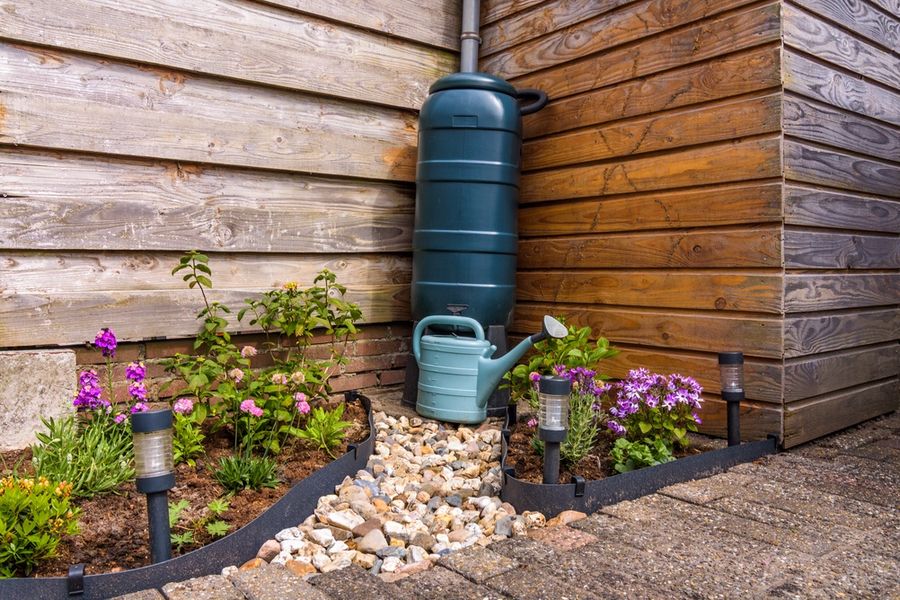
A rain barrel beside a front garden must serve as both a water-collection tool and a visible part of the landscaping. Shape, color, planter features, and resistance to weathering can matter almost as much as storage capacity. Decorative models often blend more naturally with an entry garden or front walkway, but homeowners may need to accept a smaller volume and a higher cost per gallon in exchange for a more polished appearance.
A Four-Part Framework for a Visible Rain Barrel
Evaluate a front-yard rain barrel using four connected criteria: landscape fit, planter practicality, storage capacity, and finish durability.
Landscape fit determines whether the barrel complements the entry garden and surrounding materials. A planter top should provide enough depth, drainage, and access to function as more than a decorative feature. Capacity affects how much stored water is available for nearby plants, while finish durability influences how well the barrel retains its color and appearance through sun, rain, dirt, and seasonal weather.
The Four Criteria That Matter Most
Decorative features should support the barrel’s daily purpose rather than hide weak drainage, access, or storage design. Each criterion needs to be considered in relation to the exact downspout and garden where the barrel will sit.
1) Landscape Fit From the Street and Walkway
A front-yard barrel should relate to the home’s siding, masonry, trim, containers, and planting style. Stone-look, ceramic-style, and wood-grain finishes can appear less industrial than plain utility barrels, but the right choice depends on viewing distance. A detailed surface may look convincing beside dense shrubs yet seem artificial against a clean modern wall.
Rain barrels are available in many materials, shapes, designs, and colors and may serve as a garden accent or focal point. It recommends choosing a functional model that can be maintained and fits the landscape style.
Quick test: View the installation area from the sidewalk, driveway, and front door, then choose a finish that looks suitable from all three positions.
2) A Planter Top That Works in Practice
A planter top can help a barrel blend into a flower bed by repeating plants used elsewhere near the entry. However, the planting area may be shallow, exposed to heat, or difficult to separate from the barrel’s water inlet. Buyers should check soil depth, drainage, access to the debris screen, and whether roots or loose potting mix could obstruct the collection area.
Current designs show that the planter feature and water-control system can share the same upper surface. The Good Ideas Impressions Reflections model, for example, combines a decorative reflective finish, a small planter reservoir, a screened intake, and a channel intended to direct overflow toward the front.
Quick test: Picture the planter filled with wet soil and mature plants, then confirm that the screen, downspout connection, and overflow path would remain reachable.
3) Storage Volume Versus Decorative Footprint
A barrel that looks compact may also hold less water than a wider utility-style design. That trade-off may be reasonable when the goal is to water a small front bed or several containers, but it becomes more limiting when the downspout drains a large roof area or the garden needs frequent watering.
Do not compare capacity without checking usable water access. A low spigot may require a stand for a watering can, while a higher spigot can leave water below the outlet. Linking a second barrel can expand storage, but the additional container may weaken the polished front-yard appearance that justified the first purchase.
Quick test: List the plants the barrel will serve and decide whether one stored batch of water should cover a light watering, a full garden session, or several days of use.
4) Color and Finish Durability
Dark resin, stone effects, painted details, and high-gloss surfaces can react differently to sunlight and dirt. A finish described as UV resistant may be better suited to an exposed location, but buyers should still check the warranty language and care instructions rather than assuming the original color will remain unchanged indefinitely.
Location can reduce visible wear. Afternoon shade may limit direct exposure, while nearby irrigation can leave mineral spots on a glossy surface. Textured finishes may hide scuffs but hold soil in grooves, and pale colors may show gutter residue near the inlet.
Quick test: Identify the hours of direct sunlight at the downspout and choose a color that would remain acceptable if it became slightly duller, stained, or uneven over time.
The Shortcuts That Lead to the Wrong Choice
Choosing by appearance alone can produce a barrel that photographs well but is awkward to use. A planter may block the inlet, a decorative rim may collect standing water, or the spigot may sit too close to the ground for a watering can. The overflow outlet may also point toward a walkway, foundation, or neighboring planting area that cannot absorb another stream of runoff.
The opposite shortcut is choosing the greatest available capacity without considering scale. A large container may dominate a narrow front bed, block a window, or require more screening than the homeowner expected. Capacity has value only when the stored water can be used between storms.
Color samples also deserve caution. Product photographs may be taken under bright studio lighting, while textured resin can look different in shade or against brick. Compare the listed dimensions with the wall and downspout rather than relying on a close-up image with no surrounding scale.
Three Front-Yard Situations With Different Priorities
The same barrel will not suit every visible installation. The downspout location and the homeowner’s main goal should determine which criterion receives the most weight.
For a Front Garden Beside the Main Entrance
Choose a decorative planter-top barrel when appearance clearly matters more than maximum storage. Repeating nearby flowers can help the unit feel like part of the landscaping rather than exposed utility equipment. The accepted trade-off is a higher cost per gallon and a planter that adds watering, trimming, and cleanup duties.
For a Side-Facing Front Downspout Partly Screened by Shrubs
Give storage volume and outlet access more weight than elaborate surface detail. A simple textured or neutral-colored barrel can remain unobtrusive while providing more practical capacity. The trade-off is giving up a stronger planter or pottery-style effect that would matter in a fully exposed location.
For a Sunny Front Wall with No Natural Screening
Prioritize finish durability, stable placement, and a color that will tolerate visible dust and weathering. A UV-resistant resin claim and clear warranty are more useful here than small decorative accents. The trade-off may be a simpler finish or narrower color selection.
Cost, Installation, and Ongoing Constraints
Decorative molding, specialty finishes, integrated planters, metal fittings, and shaped overflow channels can raise the purchase cost without increasing storage. Compare cost per gallon only after deciding that curb appeal has real value in the chosen location. A plain barrel hidden behind the house and a decorative barrel beside the entry solve different visual problems.
The ownership cost may also include a level base, stand, downspout diverter, overflow hose, connecting kit, replacement screen, or winter storage arrangement. Confirm which parts come with the barrel before comparing products. A model that appears complete may still need extra hardware to route water safely away from the foundation.
Maintenance affects appearance as well as function. Planter soil can spill onto the lid, screens can collect roof debris, and textured surfaces may need brushing. Buyers concerned about color fading should save the warranty and care instructions, photograph the original finish, and avoid cleaners the manufacturer does not recommend.
Choose for the Part of the Yard People Actually See
For a visible front garden, start with landscape fit and then confirm that the planter, storage volume, and finish can support normal use. A decorative barrel is a sensible choice when curb appeal is a real priority and the homeowner accepts lower capacity or greater cost for a better-looking installation. Measure the available space, trace the overflow route, and inspect the planter and screen access before ordering.