

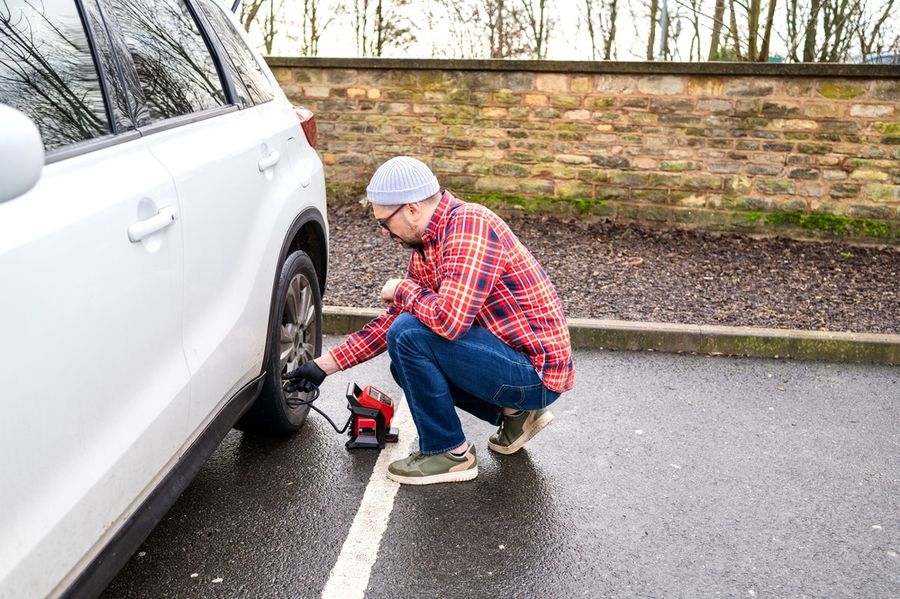
A low tire warning can turn an ordinary drive into a stressful roadside stop, especially when traffic, weather, or poor lighting adds pressure. A portable tire inflator can help, but only when the driver can reach the valve, connect the power source, and understand the controls quickly. Maximum pressure may look impressive on the box, yet simple setup, clear readings, and manageable cords often matter more during an actual emergency.
What Shaped the Ranking
The ranking prioritizes four practical steps: removing the inflator from storage, connecting its power source, attaching the hose, and setting the target pressure. Models moved higher when those steps were clear and required fewer loose parts. Pressure gauge readability, power reliability, and trunk storage size also affected the order.
Maximum pressure served mainly as a compatibility check. Most passenger vehicles do not need the highest figures advertised by portable inflators. The tie-breaker was how easily a driver could keep the unit ready between uses without managing separate accessories or an unfamiliar battery system.
Five Roadside Tire Inflators at a Glance
|
Rank |
Option |
Best For |
Typical Cost |
Main Advantage |
Main Limitation |
|---|---|---|---|---|---|
|
1 |
Fanttik X9 Pro |
Quick self-contained setup |
Integrated hose |
Smaller vehicle focus |
|
|
2 |
AstroAI L7 |
Compact trunk storage |
Dual-value display |
Modest airflow |
|
|
3 |
Milwaukee M18 Inflator |
Existing M18 owners |
Fast inflation |
Battery sold separately |
|
|
4 |
DEWALT DCC020IB |
Flexible power access |
Three power sources |
Larger storage footprint |
|
|
5 |
VIAIR EVC88P Digital |
Long-hose reach |
Extended air hose |
Battery-clamp setup |
Every model can add air to a vehicle tire, but the roadside experience differs sharply. Power source options, hose storage, valve connections, and control layout can determine whether setup takes a few simple movements or becomes a search through cords, adapters, and battery packs.
1. Fanttik X9 Pro: Best for Quick Self-Contained Setup
The Fanttik X9 Pro fits drivers who want the fewest possible steps between opening the trunk and beginning inflation. Its rechargeable battery, integrated hose, digital display, preset modes, and automatic shutoff keep the main setup parts together. Pulling the hose from the body also activates the unit, reducing the need to locate a separate power switch or cable.
The compact body is easier to store than a larger tool-platform inflator, and the accessory slot helps keep small adapters in one place. Fanttik describes the model as suitable for compact cars, motorcycles, bicycles, and sports equipment. The limitation is that a small cordless unit may be less practical for repeated filling of large truck tires. It leads for commuters who value simple roadside setup and accept limited heavy-duty capacity.
2. AstroAI L7: Best for Compact Trunk Storage
The AstroAI L7 suits drivers who want a small rechargeable inflator that can remain in a roadside bag without taking over the trunk. Its digital screen shows current and target pressure values, helping the user understand what the tire needs before starting. Preset operation and automatic shutoff also reduce the need to watch the gauge throughout the fill.
The unit is light and self-contained, so there is no vehicle power cord to unwind before use. Its smaller battery and airflow capacity make it better suited to routine pressure corrections than repeated inflation of large tires from very low pressure. Drivers should also keep it charged rather than assuming an unused battery will remain ready indefinitely. It ranks second for easy storage and readable controls, with slower heavy-duty work accepted as the trade-off.
3. Milwaukee M18 Inflator: Best for Existing M18 Owners
The Milwaukee M18 Inflator becomes especially quick to deploy when the driver already owns charged M18 batteries. The hose, nozzle attachments, pressure presets, and controls are stored on or within the unit, while automatic pressure checking and shutoff reduce repeated gauge checks. Its larger motor is intended for passenger vehicles and light trucks, giving it more working capacity than many pocket-size rechargeable models.
The drawback is that the inflator depends on Milwaukee’s battery platform. A driver starting without a compatible battery and charger faces a larger purchase and more equipment to maintain. The body also requires more trunk room than compact handheld units. It ranks third because setup can be exceptionally direct for an M18 owner, but less convenient for someone entering the battery system only for roadside use.
4. DEWALT DCC020IB: Best for Flexible Power Access
The DEWALT DCC020IB fits drivers who place power flexibility above the smallest possible package. It can operate from a compatible 20V MAX battery, a vehicle’s 12-volt connection, or household AC power when the necessary adapter is available. The digital gauge, automatic shutoff, high-pressure hose, LED light, and onboard accessory storage make it useful for tires and other inflation tasks.
DEWALT notes that the battery, charger, and AC adapter are sold separately, while the 12-volt power cord is included. That means the quickest roadside setup depends on how the owner equips and stores it. The larger body also takes more trunk space. It ranks fourth for broad power access, with added bulk and accessory planning accepted in return.
5. VIAIR EVC88P Digital: Best for Long-Hose Reach
The VIAIR EVC88P Digital is designed for drivers who need a longer hose and direct vehicle-battery power. Its air hose can reach around larger vehicles without moving the compressor at every wheel, while the digital gauge, pressure preset, automatic shutoff, work light, and carry bag support organized use. Direct battery clamps also avoid dependence on a rechargeable internal battery.
That same power arrangement slows the first stage of setup. The driver must open the hood, identify safe clamp points, position the compressor, and manage the power cord and hose before inflation begins. The unit is also heavier and larger than a handheld cordless pump. It ranks fifth because its reach and sustained power may suit SUVs, light trucks, or travel beyond city roads, but everyday commuters must accept a more involved roadside process.
What Separates the Rankings
The factor many buyers underweight is the number of steps required before air begins moving. A high maximum pressure rating has little practical value when the power cord is buried under luggage, the battery was left uncharged, or the valve connector is difficult to attach beside traffic.
That judgment puts self-contained rechargeable models first for ordinary commuting, even though larger tool-battery and vehicle-powered compressors may inflate more demanding tires. Setup speed does not make a small model universally better. It changes which compromise is most useful during the type of roadside stop the driver is actually likely to face.
Gauge design also affected the order. A clear display that shows current pressure and the selected target can reduce uncertainty, while automatic shutoff limits the need to crouch beside the tire throughout the process. Gauge accuracy should still be checked periodically against a separate tire gauge rather than assumed from the presence of a digital screen.
How to Choose for a Roadside Kit
For a compact car used mainly for commuting, the Fanttik X9 Pro or AstroAI L7 may be the easiest options to keep in the trunk. Both combine the hose, controls, and battery in a small package, which can make roadside setup faster. The main drawback is that the battery must be kept charged, and these smaller units may be less suitable for repeatedly inflating large tires.
A Milwaukee or DEWALT inflator may make more sense for a household that already owns compatible batteries. A charged tool battery can make setup simple, and the larger inflator may be better suited to SUVs or light trucks. Check the package carefully, since tool-only models may not include a battery or charger.
For highway trips, towing, or larger vehicles, the VIAIR may be worth considering. It uses direct vehicle-battery power and has a long hose, so there is less concern about an internal battery running low. The trade-off is a slower setup because the driver must open the hood, attach the clamps correctly, and manage the cord and hose.
Always inflate the tire to the pressure recommended by the vehicle manufacturer. That figure is usually listed on the driver-side door placard or in the owner’s manual. Do not use the maximum pressure printed on the tire sidewall as the normal target, and check pressure when the tires are cold whenever possible.
Practice the Setup Before It Becomes Urgent
The top choices favor quick access, simple controls, manageable storage, and dependable power more than headline pressure ratings. A larger compressor may suit a truck or existing tool-battery owner better than the top-ranked compact models.
Before placing a portable tire inflator in the trunk, connect it to each tire once and verify that its power source, hose length, and valve fitting work with the vehicle.