

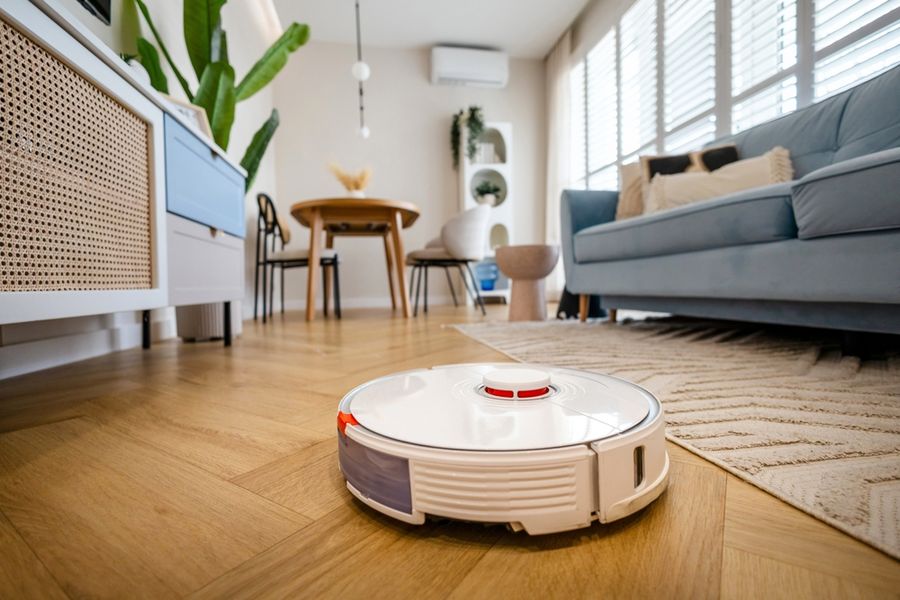
Two robot vacuums can list similar suction power, mapping tools, and app controls yet perform very differently in real homes. Rugs, furniture legs, pet hair, cords, and floor transitions can expose gaps that a specification sheet does not reveal. The right model should match the layout, flooring, and daily clutter while also aligning with the amount of brush cleaning, bin emptying, sensor care, and other maintenance the owner is prepared to handle.
What a Robot Vacuum Really Does
A robot vacuum is an automated floor-maintenance tool, not a complete substitute for every type of vacuuming. It can collect routine dust, crumbs, hair, and surface debris on a schedule, but stairs, upholstery, tight corners, and larger messes may still require other equipment. Models with mopping systems also vary in how they apply water, avoid rugs, and clean their own pads.
The common misconception is that suction power determines the result by itself. Cleaning also depends on brush contact, airflow, navigation, floor transitions, obstacle handling, and how often the bin or dock is serviced. A powerful motor adds limited value if the main brush becomes wrapped in hair, the robot repeatedly misses a room, or its shape prevents it from reaching important areas.
Popular Robot Vacuum Models to Compare
Current models show how differently manufacturers approach the same cleaning problems. The iRobot Roomba Combo 10 Max combines dual rubber brushes, obstacle recognition, a retractable mop, and a dock that empties debris and washes the pad, while the Roborock Qrevo Curv adds anti-tangle brushes, liftable cleaning parts, and a chassis designed to handle varied floor transitions.
The eufy X10 Pro Omni focuses on pet hair, carpet cleaning, object avoidance, and automatic hair removal, while the Dreame X50 Ultra uses retractable legs and a lowering navigation sensor to address thresholds and low furniture. Buyers should still compare robot height, dock size, rug behavior, and replacement-part access before choosing among them.
How Automated Cleaning Works in Practice
The process begins before the first cleaning run. The owner chooses a dock location, charges the robot, connects any required app, and clears objects that could block the route. A mapping model may need an initial trip through the home before room labels, no-go zones, and cleaning schedules can be set.
Navigation features deserve close attention because they shape coverage and obstacle handling. Common systems include LiDAR, camera-based mapping, motion sensors, and simpler bump-and-turn navigation, with many models combining more than one method. A mapped robot can support room-specific cleaning, but mapping alone does not guarantee that it will identify every cord, sock, pet toy, or narrow furniture gap.
After setup, the owner schedules cleaning or starts a job through the robot, app, or compatible voice control. The robot leaves the dock, follows its route, adjusts to obstacles, and returns for charging. The real limitation appears after the run, when the bin, brushes, wheels, sensors, filter, mop pad, or dock may need attention.
Who Benefits Most From a Robot Vacuum
Automated cleaning works best when the layout and routine allow the robot to complete frequent, predictable passes. It may be especially useful for:
- A pet owner dealing with daily hair on open floors: Regular scheduled runs can collect loose hair before it gathers into larger clumps, provided the brush design is easy to clear and replacement parts remain available.
- A household with mostly hard flooring and a few low rugs: A model with reliable floor detection and suitable brush contact can move between surfaces, although a vacuum-and-mop design must keep wet components away from rugs.
- A person who finds frequent floor cleaning difficult: Automation can reduce the need to push a full-size vacuum through every room, but the owner still needs a workable plan for carrying, emptying, and maintaining the machine.
- A busy household with predictable clutter: Scheduled cleaning can handle routine debris when cords, clothing, toys, and lightweight objects are removed or marked with virtual boundaries.
Where Robot Vacuums Fall Short
Furniture layout can limit performance more than the specification sheet suggests. A robot may be too tall to pass under a sofa, too wide for chair legs, or unable to cross a raised transition. Homes with many small rooms, thick rugs, loose fringe, crowded floors, or frequently moved objects can require more preparation than an open layout.
Mixed flooring introduces another challenge. A brush that performs well on hard surfaces may struggle with deeper carpet, while an aggressive brush can scatter lightweight debris or collect long hair around its ends. Combination vacuum-and-mop models add questions about rug detection, pad lifting, water control, and whether the dock has enough clearance for its washing functions.
A robot vacuum is also a weak choice when the owner expects completely hands-off cleaning. Self-emptying and self-washing docks reduce certain chores, but they do not eliminate tangled hair, dirty sensors, worn brushes, clogged filters, or dock cleanup.
Robot Vacuum Cost and Maintenance Commitments
Robot vacuum cost generally rises as buyers add more advanced navigation, obstacle recognition, automatic emptying, mop washing, drying, or water management. Those additions may reduce daily handling, but they also introduce bags, filters, pads, cleaning solution, replacement brushes, and dock components that can affect long-term ownership.
Maintenance needs should be checked before purchase rather than after the first blockage. It's recommended to pay attention to components such as the bin, main brush, filter, charging contacts, cliff sensors, front wheel, edge brush, water tank, and mopping pad. Other brands may use different schedules and parts, so buyers should confirm which items can be washed, which must remain dry, and which replacements are readily sold in the United States.
App dependence is another commitment. Some advanced functions may require an account, Wi-Fi connection, stored maps, or ongoing software support. Buyers who prefer local controls should verify what the robot can still do from its physical buttons if the network, app, or cloud service is unavailable.
How to Match the Robot to the Home
For an open home with mostly hard floors, prioritize navigation coverage, edge cleaning, and a brush that keeps steady contact without scattering debris. A simpler vacuum-only model may be sufficient, even if it gives up a large multifunction dock.
For a home with pets, rugs, and frequent floor clutter, place more weight on hair management, obstacle avoidance, carpet behavior, and access to replacement brushes. Accept that a more capable robot may still need regular inspection after it encounters long hair, toys, or rug fringe.
The factor many buyers underweight is maintenance friction. A dock that empties the bin can look like the largest convenience upgrade, but the better long-term choice is the system whose brushes, filters, sensors, bags, tanks, and pads fit the household’s willingness to clean and replace them. If those tasks feel excessive before purchase, added automation may create a more complicated appliance rather than an easier routine.
Choose Around the Floors and the Follow-Up Work
The right robot vacuum should match the home’s floor types, obstacles, layout, and tolerance for upkeep. Begin by listing the rooms it must clean, the surfaces it must cross, and the debris it will face most often. Then read the exact maintenance schedule and replacement-parts list before treating any navigation or suction claim as the deciding feature.