

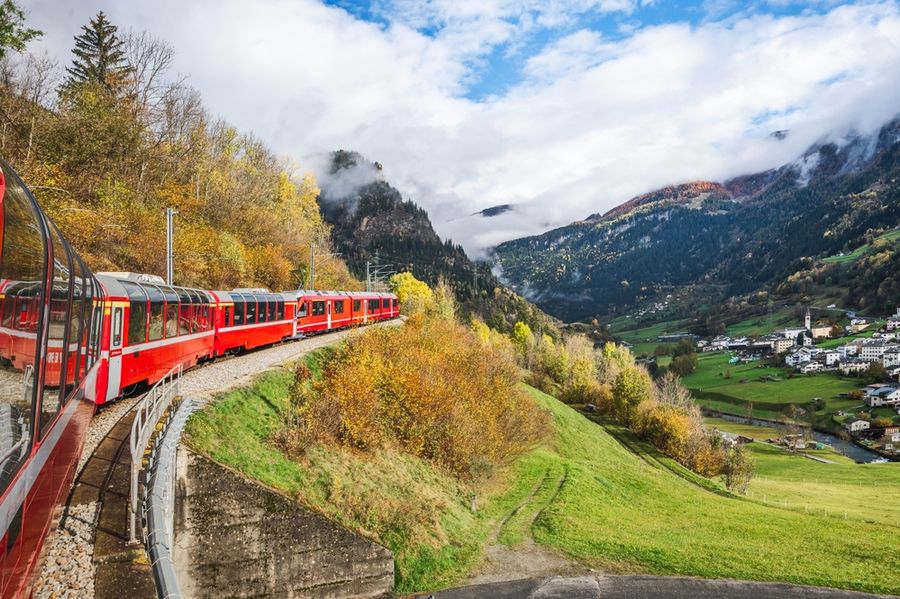
Planning a first rail trip across Europe can become confusing once pass coverage, travel-day rules, and seat reservations overlap. A broad pass may cross several borders but require extra booking work, while a national pass may cover fewer places with simpler rules. Fortunately, several European rail pass options rank well for beginners, with the most appropriate choice depending on the countries and trains in the itinerary.
How These Rail Passes Were Ranked
The order reflects four practical concerns for a first-time traveler: how clearly the pass defines its coverage, how often separate reservations are needed, how freely travel days can be used, and how easy the pass is to manage.
Wider coverage helps only when the rules remain workable. When two passes perform similarly, the tie-breaker is itinerary fit, meaning the option that matches a common beginner route more directly moves higher.
European Rail Passes Ranked at a Glance
|
Rank |
Option |
Best For |
|---|---|---|
|
1 |
Eurail Global Pass |
Multi-country first trips |
|
2 |
Swiss Travel Pass |
Simple Swiss touring |
|
3 |
BritRail Great Britain Pass |
Flexible Britain travel |
|
4 |
German Rail Pass |
Germany by long-distance train |
|
5 |
Renfe Spain Pass |
Planned Spain journeys |
1. Eurail Global Pass: Best for Multi-Country First Trips
The Eurail Global Pass ranks first because it matches the classic beginner route through several European countries. It is available to non-European residents and covers participating rail networks in 33 countries. Travelers can choose flexible travel days or continuous validity, then manage the mobile pass through Eurail’s system.
Eurail Global Pass Pros
- Coverage across 33 countries supports an itinerary that crosses several borders.
- Flexible-day versions let travelers place rest days between longer rail journeys.
Eurail Global Pass Cons
- Most high-speed trains and all night trains require separate reservations.
- Some reservations must be booked through a railway company or another channel instead of Eurail.
This pass suits travelers who value broad reach and may revise their route after arrival. Its main trade-off is that the pass does not remove the need to research each fast or overnight train before departure.
2. Swiss Travel Pass: Best for Simple Swiss Touring
The Swiss Travel Pass takes second place because it turns much of a Switzerland trip into one clear transportation product. It is sold to travelers who live outside Switzerland or Liechtenstein and covers consecutive-day travel by train, bus, and boat. That wider public-transport reach reduces the need to assemble separate local tickets.
Swiss Travel Pass Pros
- Train, bus, and boat coverage supports both city visits and day trips.
- Most ordinary Swiss trains can be used without booking a seat in advance.
Swiss Travel Pass Cons
- Standard passes run on consecutive days, even when the traveler stays in one place.
- Panoramic trains require an additional seat reservation.
This option deserves first place for a Switzerland-only vacation with frequent public transportation. It ranks behind Eurail for the broader article angle because it does not carry the traveler into a multi-country itinerary.
3. BritRail Great Britain Pass: Best for Flexible Britain Travel
The BritRail Great Britain Pass is a strong beginner option for a trip linking cities in England, Scotland, and Wales. It is available to non-UK residents and covers participating National Rail services across Great Britain. Flexible and consecutive versions give travelers a choice between selected travel days and an uninterrupted validity period.
BritRail Great Britain Pass Pros
- The pass covers National Rail travel throughout England, Scotland, and Wales.
- Flexible versions allow selected rail days to be used within a longer trip.
BritRail Great Britain Pass Cons
- Eurostar, the London Underground, buses, and several urban rail systems are excluded.
- Sleeper trains require reservations, while busy intercity services may also merit advance booking.
Choose BritRail for several long British rail trips with gaps between them. The drawback is that important city transportation and any train to continental Europe need separate tickets.
4. German Rail Pass: Best for Germany by Long-Distance Train
The German Rail Pass ranks fourth for travelers building a trip around Berlin, Munich, Hamburg, Frankfurt, or other German cities. It is available to people who live outside Germany and allows repeated travel on Deutsche Bahn trains during the selected pass days. Flexi versions offer several freely chosen travel days within one month.
German Rail Pass Pros
- Flexible travel days work well for itineraries with longer stays between cities.
- Domestic Deutsche Bahn journeys do not require a compulsory seat reservation.
German Rail Pass Cons
- Travel beyond Germany is limited to specified DB routes and destinations.
- Certain international connections require a reservation and pass surcharge.
This pass fits a Germany-focused trip with several long-distance train days and an open daily schedule. It falls below BritRail because its cross-border coverage is selective and can be easy for a beginner to overestimate.
5. Renfe Spain Pass: Best for Planned Spain Journeys
The Renfe Spain Pass ranks fifth because it is useful but less spontaneous than the other choices. It is intended for people who live outside Spain and covers a chosen allotment of journeys on eligible Renfe long-distance and regional trains. Buyers select four, six, eight, or ten trips rather than receiving unlimited travel on chosen days.
Renfe Spain Pass Pros
- The traveler can choose the number of journeys without fixing every destination at purchase.
- Eligible high-speed and regional services can be combined within one Spain itinerary.
Renfe Spain Pass Cons
- Each journey must be validated by obtaining a ticket for a specific train and route.
- The pass counts individual trips, so an extra connection can use another journey.
Choose this pass when the main Spanish city pairs are known and reserving each train is acceptable. Its journey-count system offers less freedom when plans change or a route needs several connections.
What Really Separates These Rankings
The most important distinction is how much planning remains after the pass is purchased. Broad coverage looks powerful, but a first-time traveler may gain more from simple local access and fewer reservation steps than from the largest possible map.
That is why Eurail leads for several countries, while the Swiss Travel Pass can become the stronger choice for a focused trip where trains, buses, and boats all matter.
How to Choose the Right Pass
Choose Eurail when the route crosses several countries and flexibility matters more than avoiding reservations. Choose the Swiss Travel Pass when almost the entire vacation stays in Switzerland and public transportation will be used daily. BritRail fits a Great Britain route with several intercity journeys, but travelers should plan separately for London transit and Eurostar.
Choose the German Rail Pass for repeated long-distance travel within Germany and only limited cross-border use. Choose the Renfe Spain Pass when the main journeys are already known and train-specific booking is not a problem. Before buying any pass, list every planned rail segment and mark whether it is covered, requires a reservation, or uses a separate local operator.
Match the Pass to the Trains You Will Actually Take
This ranking reflects beginner-friendly coverage, reservation effort, flexibility, and ease of use, but a focused route can move a lower-ranked pass to the top. Map the major train days first, then verify the residency rule and reservation requirement for each planned service.
That simple check prevents a broad pass from being mistaken for a complete ticket to every train. With due diligence, your European rail trip will be a smooth ride!